The New Media™️—2026 Social Media Hot-Takes from a 6-figure Creator
I've been on social media for over a decade—first as a chronically online user, then as a hobby blogger, then scaling across platforms as a creator to over 1M+ followers. And here's what I've noticed: the industry loves to pretend it's still figuring itself out, still experimenting, still in its "disruptive startup phase."
But the truth? I’m calling them "2026 predictions", but they’re really just acknowledgments of what's already been happening for years (while everyone was too busy optimizing for virality to notice).
So consider this less of a forecast and more of a wake-up call. These are the trends I've been watching, betting on, and building around—and in 2026, I think we'll finally stop pretending they're not already here.
1. AI Becomes Default = Humanity Becomes Luxury
When everyone has access to the same AI tools, the differentiator isn't who uses them best. It's who doesn't need them at all.
I've been thinking a lot about Apple's positioning lately. When the entire tech world was screaming about AI capabilities, Apple did something brilliant: they didn't compete. They created "Apple Intelligence"—a different lane, different positioning, instant differentiation in a commodified market.
Creatives should take notes.
In 2026, I want to see a fundamental shift in how artists and creators position their work. The smart ones will stop trying to compete with AI efficiency and start marketing themselves as AI-impossible. Think handmade goods in the age of mass production. Think vinyl records when streaming became ubiquitous. Think farmers' markets when grocery stores put everything under one roof.
This isn't about being anti-technology—it's simple positioning. When AI-generated content becomes the baseline, the value proposition shifts to what can't be replicated: lived experience, cultural nuance, emotional intelligence, the kind of insight that comes from actually being human in the world.
I've already started seeing this play out in the creator economy. The travel content that performs best for me isn't the perfectly optimized, algorithm-friendly stuff. It's the messy, personal, "I can't believe this happened to me" moments that no AI could fabricate because they required me to actually be there, in that moment, making that choice.
So here's my advice to creatives: stop competing on efficiency and start competing on soul. Market your work as vintage, handmade, irreplicable. Position yourself as a luxury in an AI-default world. Because in 2026, humanity won't just be a selling point—it'll be the entire product.
2. Social Media is Media. Full Stop.
Let's get this out of the way: social media isn't "disrupting" traditional media anymore. It IS media. And we need to stop pretending otherwise.
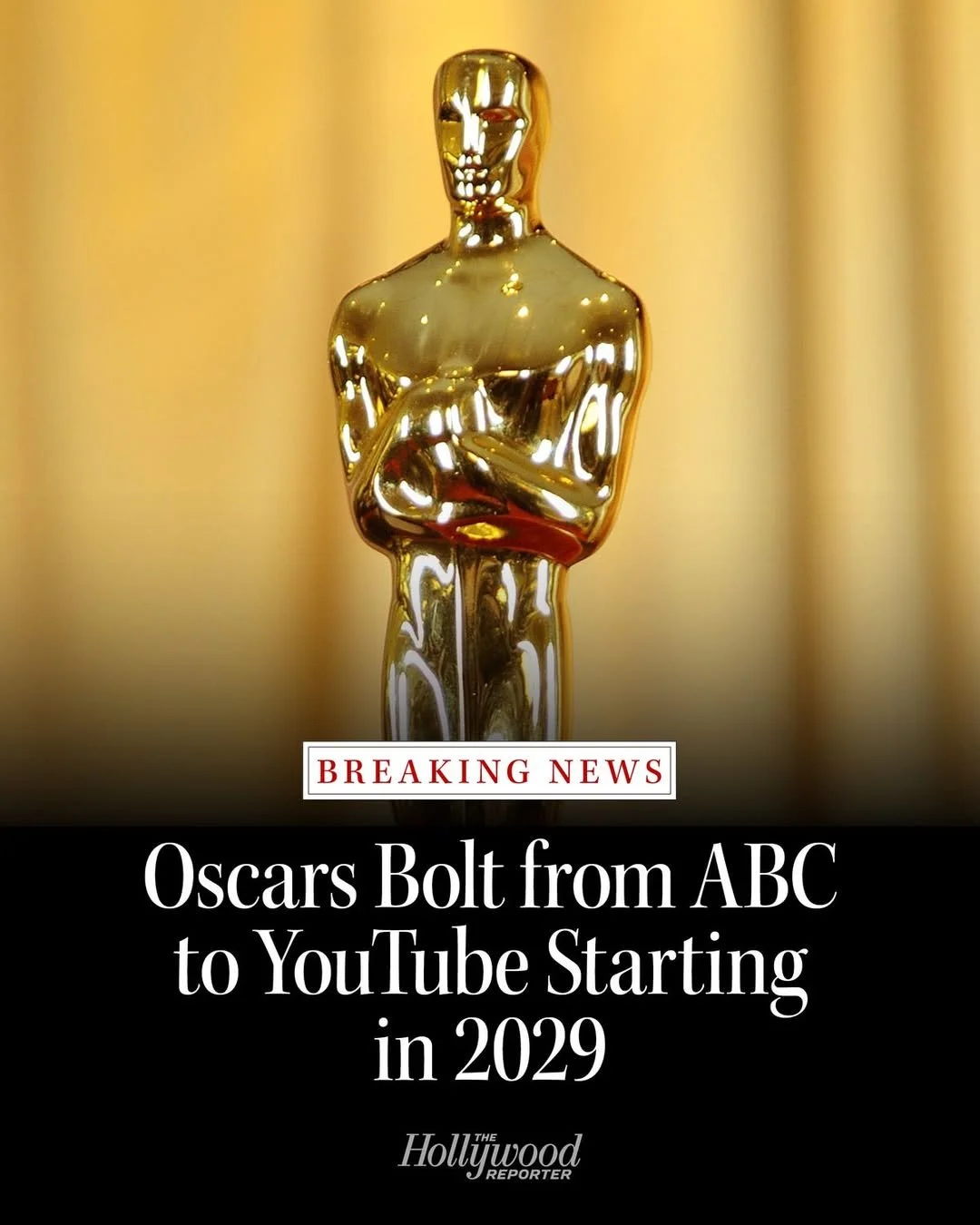
The evidence has been piling up for years. The Oscars announced they're moving to YouTube in 2029. Netflix—remember when they were just the DVD mail company?—now has NFL games. Instagram launched a TV app. Gen Z gets their news exclusively from social platforms, with over 50% turning to TikTok and Instagram as their primary news sources.
We are looking at a complete category collapse.
For years, "influencer" was treated as a diminutive. A step below "real journalist" or "actual celebrity."
But look at who's booking the interviews, who's breaking the news, who's driving the cultural conversations. Creators aren't waiting for validation from traditional media gatekeepers anymore because we've become the gatekeepers.
I experienced this firsthand when I started getting speaking opportunities. The questions weren't "how many magazine features have you had?"—they were "what's your platform size?"
Because that's what matters now. Distribution is power, and influencers have the distribution.
This shift has massive implications for how we think about content strategy. If social media IS media, then we need to stop treating it like a marketing channel and start treating it (and investing into it) like a publishing empire. That means editorial calendars, content verticals, audience development strategies—all the things traditional media companies have been doing for decades, just executed in native platform formats.
In 2026, I think we'll finally see this reflected in how brands, institutions, and creators operate.
No more "social media team" tucked into the marketing department. Social will be the media strategy. Because it already is—we've just been too attached to old hierarchies to admit it.
3. For Thought Leaders, Instagram > TikTok
Here's something I've been saying for a while that gets me sideways looks from the TikTok-first crowd: if you're building a thought leadership brand, Instagram is a better long-term bet than TikTok.
I know, I know. TikTok has the reach. TikTok has the algorithm. TikTok makes content go viral in ways Instagram can't replicate. All true. But here's what TikTok doesn't have: conversion infrastructure for ideas-based businesses.
Unless you're selling a physical product or an affiliate product that can go directly to TikTok Shop or Amazon shop, the path from TikTok content → actual business outcomes is unnecessarily convoluted.
No clickable links in captions. Limited profile space. An audience that's primed for entertainment, not investment in your services or programs.
Compare that to Instagram: link stickers in Stories, clickable bio links, DMs that actually facilitate business conversations, an audience expectation that creators monetize through various channels. Or YouTube with its long-tail discovery and multiple touchpoints. Or LinkedIn, where B2B conversions happen natively. Or Substack, where newsletter subscriptions happen in one click.
I've seen this play out in my own business. My TikTok content gets more views, sure. But my Instagram content drives more speaking opportunities, more brand partnerships, more actual business relationships. Because the platform is set up for conversion, not just consumption.
This isn't about abandoning TikTok—it's about being strategic about where you invest your deepest thinking. In 2026, I predict we'll see lifestyle creators, career coaches, travel experts, personal development voices, and other idea-based brands doubling down on platforms with long-tail discovery and multiple conversion points.
Build where your audience can actually hire you, not just heart your videos.
4. Platform-Specific Content Becomes Nonnegotiable
I'm going to say something that might be controversial: repurposing is dead.
Or at least, lazy repurposing is dead.
For years, the content playbook was simple: create once, distribute everywhere. Make a TikTok, post it to Reels, upload it to YouTube Shorts, call it a day. Maximum efficiency, maximum reach.
But that strategy completely disregards culture.
And if you're not speaking the native language, your content sticks out like an American tourist in Paris wearing a fanny pack and asking loudly for directions in English.
TikTok content can translate to Instagram because the platforms share a similar aesthetic and pacing. But Instagram content doesn't translate to TikTok because Instagram's polished, curated vibe feels inauthentic in TikTok's rawer ecosystem. LinkedIn demands different framing than Twitter. YouTube Shorts and TikTok might look the same format-wise, but the audience expectations are completely different.
You kind of need to be chronically online to understand these nuances. You need to know that Instagram users scroll for aspiration while TikTok users scroll for authenticity. That LinkedIn rewards professional humility while Twitter rewards hot takes. That YouTube prioritizes depth while TikTok prioritizes hooks.
This is why I tell brands and creators: pick 2-3 platforms, become villagers there, and post in the native culture. Learn the unwritten rules. Understand what gets mocked. Know what resonates. And then create specifically for those spaces instead of trying to make one piece of content work everywhere.
In 2026, the creators who thrive won't be the ones with the most efficient repurposing systems. They'll be the ones who understand that each platform is a different country, and you need to speak the language if you want to be heard.
5. We Desperately Need Better Analytics Tools
Let me tell you about a humiliation ritual that happens daily in the creator economy: screenshotting social analytics from five different platforms and manually typing them into spreadsheets.
In 2025. When AI can write essays and generate images. When we can video chat with someone on Mars. I'm still taking screenshots and entering numbers into Excel like it's 1997.
What creators actually need—what I need, what every marketing professional in this space needs—is a tool that pulls Top 5 performing content across platforms, with variables like engagement rate, reach, positivy index, automatically. That offers AI-powered social listening to identify trends in comments. That analyzes engagement patterns and suggests optimal posting times based on your specific audience, not generic industry data.
And it needs to cost less than $100/month because most creators aren't working with agency budgets.
The analytics tools that exist right now are either:
Free but basic (native platform insights)
Expensive and built for agencies (Sprout Social, Hootsuite at $300+/month)
Focused on one specific metric (followers, engagement, etc.)
What's missing is the tool for the creator middle class: sophisticated enough to be actually useful, affordable enough to be actually accessible.
In 2026, I'm manifesting this into existence. Someone, somewhere, is going to build the analytics tool creators have been begging for. Cross-platform reporting. AI-powered insights. Comment sentiment analysis. Top content identification. All in one dashboard. All for a price that makes sense for individual creators and small teams.
Because if we're going to keep treating social media as media—as real publishing, as real business—we need tools that reflect that reality.
6. EGC is Exploitative and will backfire in 3-5 Years
One of the most interesting shifts happening right now is brands moving from fearing employee-made content to actively encouraging it. For years, companies were quick to discipline employees for posting about work without permission. Business Insider reported on a Chick-fil-A worker who said she was fired after a menu-hack TikTok went viral—despite the fact that, in her view, she had just given the brand free publicity.
Now the pendulum has swung the other way. Employee-Generated Content (EGC) is being framed as the future: more authentic, more trusted, more scalable. Even marketing platforms are openly calling it “the next big thing for brands,” as companies formalize employee influencer programs and put more staff on camera.
My hot take is that a lot of this is—you guessed it—exploitative.
Because being good on camera is not the same thing as casually “helping out with social.” It’s labor. It’s creative strategy. It’s performance. It’s exposure. It’s opening yourself up to public commentary, criticism, and scrutiny in a way most employees were never hired—or properly compensated—to handle.
And to me, a full-time Creator for 5 years, the biggest issue is ownership. The U.S. Copyright Office says that if content is created within the scope of employment, the employer is generally considered the author and copyright owner unless there’s an agreement saying otherwise—the definition of Works Made for Hire. So the employee takes on the visibility, the reputational risk, and the extra work, while the company keeps the asset.
That’s why I think EGC will backfire in 3–5 years.
Once employees realize their face, voice, personality, and cultural fluency are generating real business value, they’re going to start asking harder questions: Is this in my job description? How am I being compensated? What happens if the content performs? What do I own? And brands that underhandedly packaged creator labor like a cute little add-on to someone’s day job are going to find out, very quickly, that scope creep doesn’t scale. Incentive does. Protection does.
Key Takeaways:
There’s a thread running through all of my predictions. Can you spot it?
We're moving from experimentation to maturation. From "figuring it out" to "this is how it works." From disruption to infrastructure.
Social media isn't new anymore. Influencer marketing isn't cutting-edge. AI-generated content isn't science fiction. These are established realities, and in 2026, I think we'll finally start building systems, strategies, and standards that acknowledge that.
For creators, this means getting more strategic. Understanding that platform choice matters. That humanity is a differentiator. That professionalism and analytics aren't optional.
For brands, this means recognizing that social isn't a marketing channel—it's the primary media landscape. And the creators who've built audiences there aren't vendors to be managed, they're media partners to be respected.
For everyone, this means accepting that the future we've been predicting is already here. We're just still using yesterday's frameworks to understand it.
So these aren't really predictions. They're observations about what's already happening, dressed up as forecasts because that's what makes for good headlines.
But the truth is simpler: 2026 won't be the year everything changes. It'll be the year we finally admit everything already has.
_____
Gabby Beckford is a Creator @packslight, speaker, and consultant with over 1M+ followers across platforms. She specializes in travel, lifestyle, and personal development content, and has spent the last decade building digital platforms and advising brands on creator strategy. She has a TEDx talk on Delusional Confidence and she's built a seven-figure content business by betting on shifts before they become obvious.
Follow her takes on creator economy, platform strategy, and being chronically online on her LinkedIn, or even better—work with her.