So, everyone works in “Influencer Marketing” except… Influencers? Is that right?
Let’s start with three facts: 1)The Creator Economy is worth $250 billion, 2) it’s projected to hit $500 billion by 2027, and 3) brands have tripled their influencer spend in five years.
The industry gets breathless write-ups in the Wall Street Journal, panels at Cannes, and its own dedicated venture funds.
But the people who actually built it? We’re still sitting outside the room.
Often in need of a blankie and a hug, on day 35 of waiting for a NET-60 check.
And that’s something that has always bothered me.
When you see a “Top Creator Economy Experts” list, scroll through it. You’ll find Founders, operators, talent managers, social media strategists, agency executives, influencer lawyers, data analysts, and VCs. And you will rarely, if ever, find an actual Creator.
Because what they really mean is “the people who run the Creator Economy”. Whereas Creators are just the labor. Like the billion-dollar film industry and its chronically underpaid actors. Like the multi-trillion dollar food system and the farmers who can’t make rent.
The infrastructure gets rich, and the source gets squeezed.
And I want to talk about it.
The data… is right there. By the way.
According to Demand Sage, there are over 207 million creators worldwide. Of those, nearly 57% of full-time creators, per NeoReach’s 2025 Creator Earnings Report, still earn below the U.S. living wage of $44,000 a year—and we’re not talking about beginners. We’re talking about people years deep into their careers, while the platforms they build on and the brands they bring to life are generating billions.
Less than 1% of creators are what you’d call mega-creators, the ones with full strategy teams, agents, managers, and PR firms.
The other 99% do every single one of those jobs themselves: strategist, producer, editor, brand negotiator, distribution lead, analytics interpreter, community manager. Alone, every day, across every platform.
That’s a small business with a one-person C-suite.
We’re not allowed beyond the “talent” bucket. (And that word is doing a lot of work.)
Creators are still solely filed under “talent.” Not Founders. Not SMEs. Not thought leaders, talent, a word that is a compliment and a cage at the same time.
It is worth noting that over 77% of influencers are women, according to Collabstr’s 2023 Influencer Marketing Report, in a field that is simultaneously celebrated as revolutionary and treated as decorative.
The same cultural dismissal that has always minimized women’s work, applied with a fresh coat of “content.”
Despite the fact that we are—without exaggeration—the entire reason this industry exists, we are still treated as faces on a screen instead of Founders who built successful businesses from zero, or social strategists with years of first-hand platform-native expertise. Not as the very people Fortune 500 CMOs are desperately trying to reach.
“You’re the first Creator I’ve ever talked to!” — a CMO who designates budget to the influencer marketing team
Can I tell you something else shocking/not shocking at all?
I’m usually the very first Creator many high-level and C-suite marketing leaders have ever met.
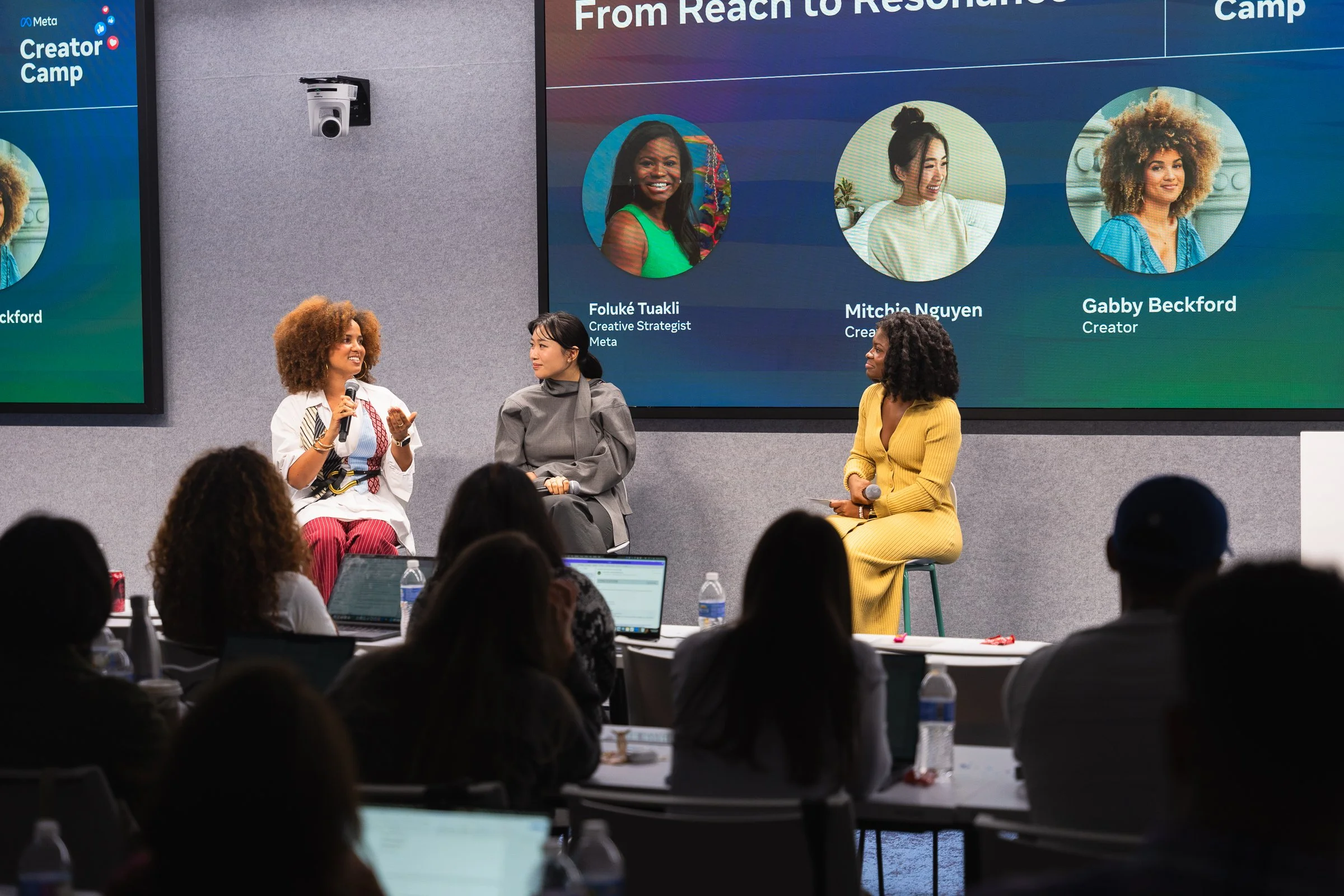
I speak in C-suites. I’ve sat across from the senior leadership of some of the largest brands in the world, Google, Chase, PepsiCo, Mastercard—and I am frequently the first actual Creator many of them have ever met.
We’re not rare. We’re not invited.
When the people building the industry are treated as guests in conversations about it, something is structurally broken. It is not an oversight.
It is a pattern.
What the hell do Influencers know about marketing?
Okay, this is the part where I defend my thesis… Give me a second to stretch.
Malcolm Gladwell said it takes 10,000 hours to master something. Creators are somewhere between 10,000 and "I haven't slept properly since 2019."
There are two kinds of expertise:
The kind that comes with a credential—a degree, a title, a business card that signals you're allowed to speak.
And the kind that comes from just doing the thing, relentlessly, until you're undeniably good at it. Your cousin fixing drywall for fifteen years without a contractor's license. Your college roommate who did nails out of your dorm room and made more money than you did waitressing.
They have the reps. The credential feels beside the point.
Creators are the second kind.
Many of us pivoted from other industries. Most don't have a diploma that says "Digital Content Strategist" because that degree didn't exist when we started.
We built the field while we were working in it.
So… What do influencers know about marketing?
We know how to stop a scroll. We know what makes someone click away in two seconds versus screenshot and send to a friend.
We know audience sentiment in real time—not through a survey panel with a two-week turnaround, but in the comments, the DMs, the replies, every single day. We are social listeners running continuous qualitative research on hundreds of thousands of people.
I want to be honest: ask 100 influencers about the creator economy and maybe half the answers will make you tilt your head.
But the ones who treat audience psychology, platform dynamics, and cultural fluency as actual craft are sitting on proprietary intelligence no agency brief or focus group has.
I may not have a degree in advertising, but I do have one in Statistics (and a minor in Middle Eastern studies). I have 800,000 followers, 13 million TikTok likes, and 6 years of daily conversation with a real audience.
I know what they trust. I know what they tune out. I know exactly how a brand partnership has to be framed to feel like a recommendation and not an interruption.
That is expertise. Earned, tested, real.
Creator insight saves brands from expensive misfires. It's the difference between content that stops the scroll and content that gets muted. Between a message that reaches the niche and one that talks past it.
Because people trust people—not logos.
My hottest Creator Economy take:
Any Creator Economy room with zero Creators in it is a performance. And any Creator Economy “Experts” list without Creators on it is the industry patting itself on the back for work it didn’t do.
Creators are not the raw material of this economy. We are its architects.
And until the panels, the lists, the boardrooms, and the VC pitches reflect that, all of it is just infrastructure talking to itself, wondering why the signal is weak.
If you’re a Creator who has ever been the only one in a room supposedly built for you: I see you.
And if you’re building those rooms: Let me help you (systemically, structurally) fix the guest list.
***
Gabby Beckford is an Engineer → Influencer with an audience of 800K+, and Influencer Marketing Expert. After 6 years full-time, she fluently translates insights between brands, agencies, creators, and audiences and lays out pratical next steps with a uniquely-her #CreatorPOV. Work with Gabby.